This is, in the plainest sense, a post about a post. Yet I hope you’ll find, as I did, that even the most ordinary things can become signposts to something higher.
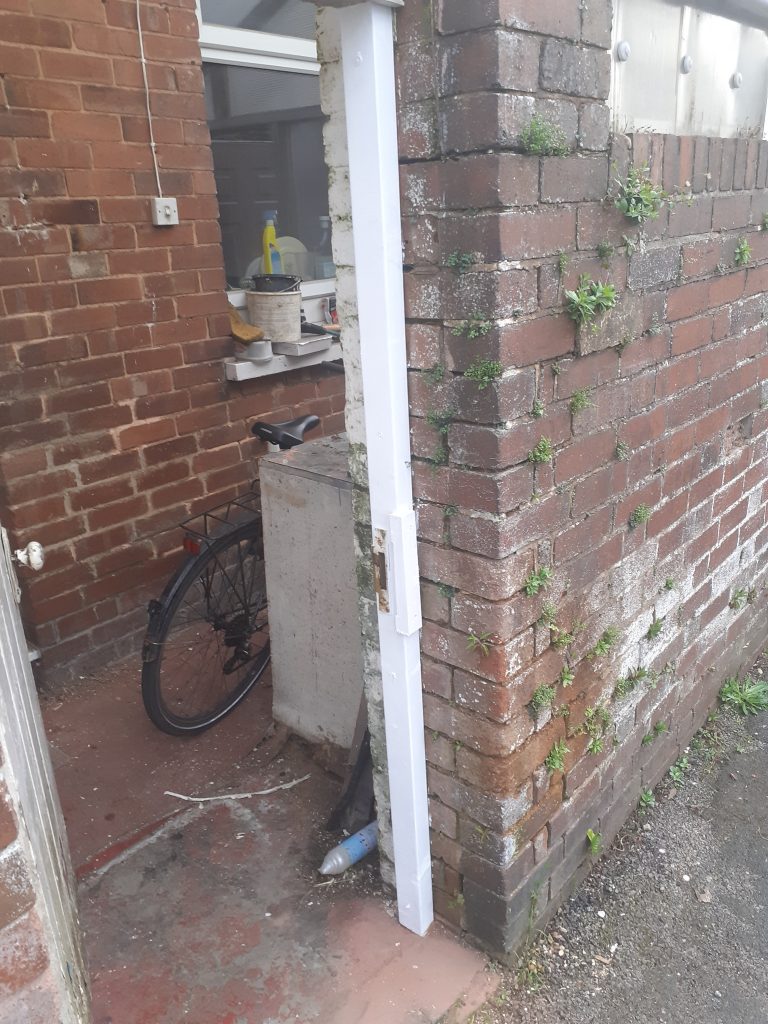
It began, as these things often do, with something small: a rotted door post at the back of the house.
A trivial repair on paper, but not in feeling. A weakened frame is a weakened sense of safety, and after weeks of shifty voices, inflated quotes, and the slow erosion of trust that comes from dealing with people who see you as a mark rather than a person, the post had become a quiet source of unease.
I had almost resigned myself to the usual run of cowboys when a young local man named Alex arrived.
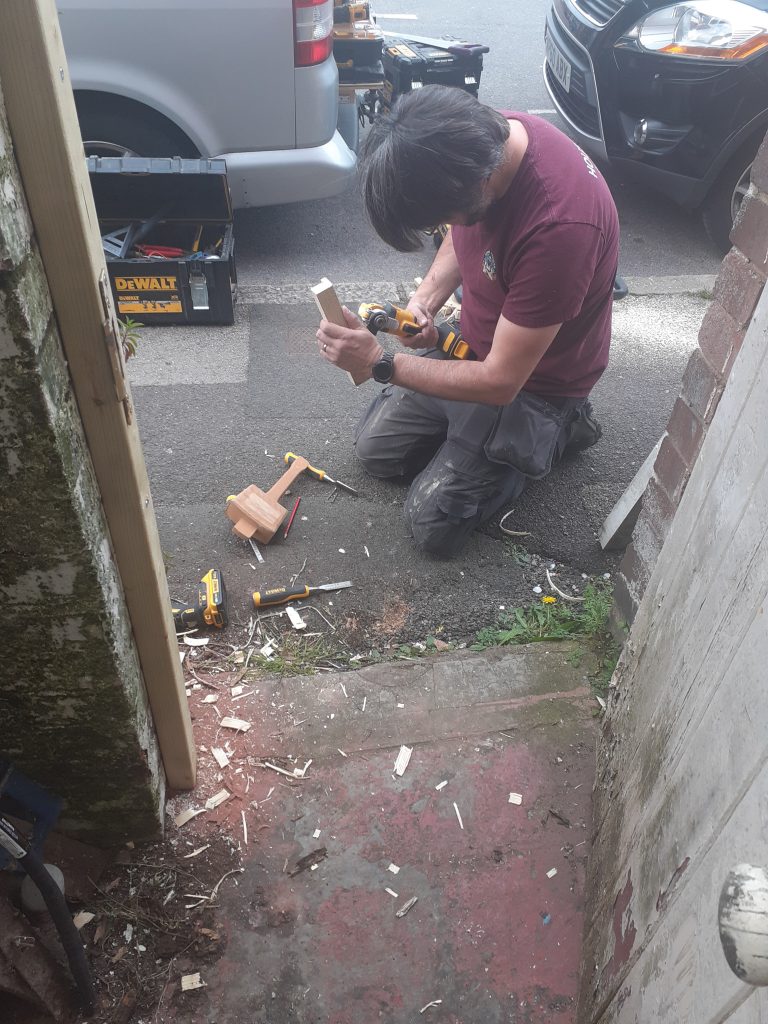
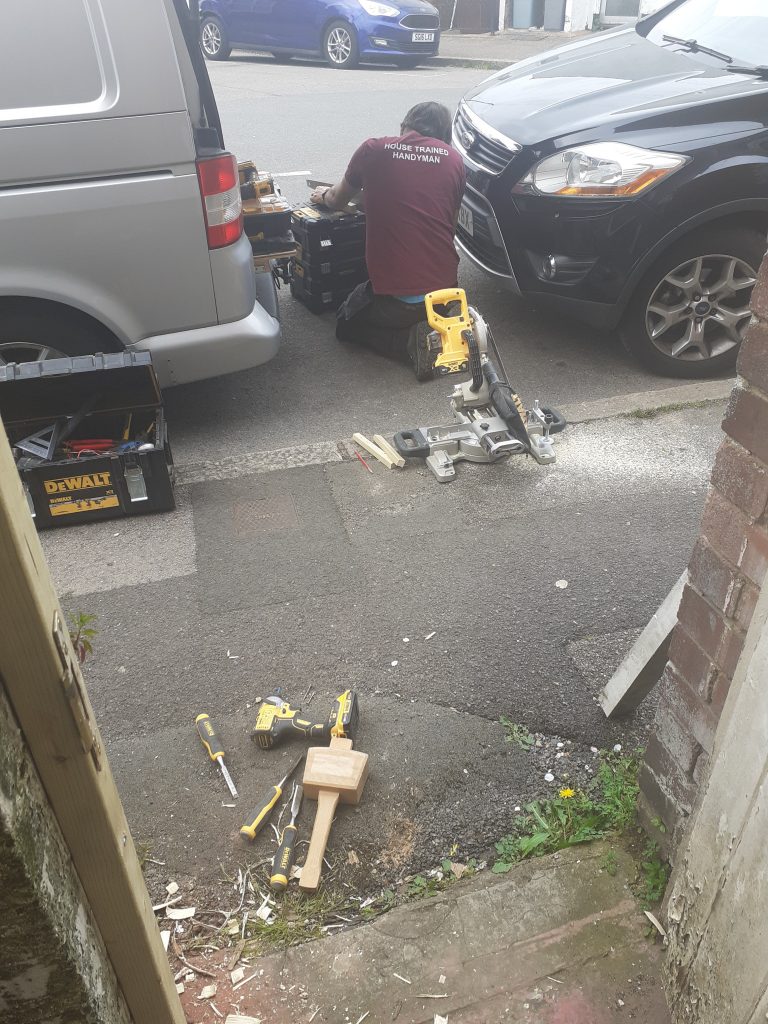
He was younger than most in his line of work, quietly spoken, calm, and carrying a van full of tools that looked less like equipment and more like extensions of his mind. A mini band saw he assembled on the pavement. Every kind of cutter, chisel, and drill. The sort of kit only someone who cares would invest in.
He assessed the job, quoted a very fair price, and then — despite being fully booked until July — offered to do it that very afternoon.
And he did.
Not quickly. Not grudgingly. But with the kind of patient attention that belongs to people who take pride in doing things properly.
He refashioned the batten again and again, shaving it, adjusting it, checking the fit, not because he had to, but because he wanted it right.
When I apologised for the difficulty, he smiled and said he enjoyed the problem‑solving. How many tradesmen say that?
A Byzantine Aside
When he told me his name was Alex, my mind — in the Byzantine labyrinth it has become — immediately leapt to Alexius Komnenos, the emperor who once inherited a realm in disarray and set about restoring what had decayed. Not that a Byzantine ruler had suddenly appeared on Buller Road with a mini band saw, but the association wasn’t entirely inappropriate. After my Father died, the house passed to me in a state that could only be described as an inherited mess, and I’ve been on the strategic defensive ever since — leaking roof on one flank, collapsing fence on another, rotting posts breaching the perimeter. And here was a young man, calm and capable, restoring order to a small corner of my world with a seriousness and care the emperor might have envied.
He fetched the wood — despite fuel prices rising. He painted the finished post. He swept up every shaving. He took away the rotten timber. He charged less than agreed, because, as he put it, “not everyone has a lot.”
And then, in the quiet way people sometimes reveal themselves, he told me a little of his life.
A father who left a paid job for an unpaid one because it helped people in alms houses. A friend whose dog‑walking business he supported by designing an advert and placing it in the local magazine. A gut condition brought on by stress. Two small tattoos hidden beneath his watch strap — symbols he looks at when times are hard, reminders never to despair.
A young man who has possibly come up from a dark place, and chosen decency rather than bitterness.
A rare bird.
And as I watched him work, I realised the post he was repairing was no longer just a post.
It had become something else — a small, sturdy monument to the Good.
Not the good of philosophy books, not the good of sermons or slogans, but the good that manifests quietly in the way a person behaves when no one is watching.
The good that doesn’t preach, but simply is.
After years of dealing with people who put money before people, Alex reminded me that goodness still exists — not in grand gestures, but in the careful refashioning of a batten, the fair price, the swept pavement, the hidden tattoo, the ethos inherited from a father who believed in service.
And so the post now stands at the back of my house, straight and solid, painted and true.
But for me, it will always be more than timber.
It will be a reminder that the good is real, that it still walks among us, and that sometimes — when you most need it — it arrives in a battered van with sliding doors and a young man named Alex.