Whose time? Whose world?

On the mismatch of time and the fatal consequences of treating history as a transaction

There is a persistent temptation in every age to believe that reality has finally become legible—that the world, in all its complexity, can be grasped, managed, and, ultimately, resolved. In our own time, this temptation often takes a particular form: the belief that events unfold within a single, shared horizon, accessible to calculation and decision, and that what resists settlement today may, with sufficient clarity and resolve, be brought to conclusion tomorrow. And yet, beneath this confidence, there are signs that we are not inhabiting one coherent sense of time, but several—moving alongside one another, occasionally intersecting, yet never fully aligning. What appears, in one register, as a problem awaiting resolution, emerges in another as something far less tractable: a continuity without clear beginning or end, shaped not only by decisions, but by memory, inheritance, and return.

It is within this deeper, more enduring sense of time that much of human history unfolds—rarely announced, seldom resolved, yet always present beneath the surface of events.

My Father lived within such a horizon. His life, shaped by war, displacement, and the arbitrary violence of competing powers, did not proceed in the orderly sequence that official histories so often suggest. Instead, it was marked by ruptures that did not remain in the past, but persisted—reappearing in memory, in silence, in the quiet, unspoken knowledge of what had been endured. The categories imposed upon him—enemy, ally, labourer, refugee—shifted with bewildering speed, each carrying consequences that could neither be anticipated nor contained. What appeared, from above, as decisions or settlements belonged to one kind of time; what was lived below unfolded in another altogether, where nothing was ever fully concluded, and where the past remained an active presence within the present.

And yet, it is precisely this deeper continuity—this persistence of lived time—that seems increasingly absent from the language through which the present seeks to understand itself. In its place, another register asserts itself: one that speaks not of endurance, but of resolution; not of memory, but of outcome. It is a language in which complexity is recast as negotiation, and negotiation as something that can be brought, decisively and finally, to a close.

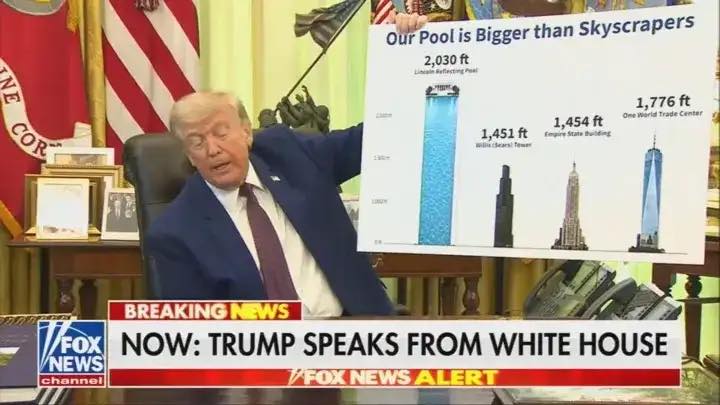
It is here that the word “deal” enters with such force. So often invoked by figures such as Donald Trump, it carries with it the assumptions of a particular kind of reasoning: that actors are defined by interests, that interactions are transactional, and that resolution lies in the successful alignment of terms. Within its own domain, this reasoning possesses a certain clarity, even an appeal. But when extended into the realm of history, identity, and long-standing conflict, it begins to displace more than it reveals.

Consider, for example, the relationship between the United States and Iran. It is not a discrete problem awaiting closure, but a layered accumulation of events, stretching back through the Iranian Revolution and into more recent episodes such as the Joint Comprehensive Plan of Action. Each moment leaves its trace. Each action is remembered, reframed, and folded into a narrative that cannot simply be set aside. A deal presumes closure. History does not permit it.

What is revealed here is not merely a mismatch of language, but a divergence in how reality itself is apprehended. On one side, a world of discrete actors and negotiable outcomes; on the other, a world of interconnections, in which actions reverberate across time and cannot be isolated from their consequences. Increasingly, it is the latter vision that seems closer to the truth.

Reality does not present itself as a collection of separate things, but as a web of relations. What appears isolated at one level reveals itself, at another, as deeply entangled. The idea that one can act upon the world, extract an advantage, and step away untouched becomes difficult to sustain. There is no outside position from which the consequences of action can be escaped. Even withdrawal is a form of engagement.

This has profound implications for how we think about power. If the world is relational, then the exercise of power is never purely external. To dominate, to coerce, to treat others as disposable is not simply to alter their condition—it is to reshape the network of relations in which one is oneself embedded. The effects return, often in unexpected and magnified forms.

The reduction of politics to transaction, then, is not merely inadequate—it is dangerous. It encourages a form of reasoning highly effective in identifying means, but largely indifferent to ends. It asks what can be done, but not what ought to be done, or what kind of world such actions bring into being. At its limit, it risks collapsing into the pursuit of power for its own sake—not as a means, but as the only end it can recognise.

And yet, there remain dimensions of human life that resist such reduction. Call them moral, historical, even spiritual. They are the dimensions in which meaning is formed, memory preserved, and the past continues to shape the present in ways that cannot be negotiated away.

The tragedy of our moment may lie here: not merely in misjudged policies, but in the collision of temporal frameworks that cannot be reconciled. A language of immediacy and closure encounters a world structured by duration and return. A logic of transaction meets a reality that cannot be transacted without remainder.

Decisions may be made with confidence in one register, while their consequences unfold in another.

My Father’s life, in its quiet and unassuming way, stands as a counterpoint: a reminder that history is not an abstraction, nor a problem to be solved, but a lived reality that resists simplification and demands attention.

The mismatch of time is not an abstract problem; it is alive in the decisions that shape our world today. When leaders perceive the world as a series of transactions, as problems with endpoints to be closed, they may act with certainty—but not with understanding. History, memory, and the web of human relations do not submit to schedules or leverage. They respond, inevitably, to what has been done, and their consequences unfold in ways that cannot be fully controlled.

To treat crises as if they were deals is to act upon a world one has already misunderstood. And a misunderstood world does not remain static; it returns, often amplified, often in forms that no negotiation can fully contain. The danger is not speculative—it is visible in the fractures, the escalations, the unseen reverberations of past action.

If we cannot perceive the depth and persistence of time, if we cannot reckon with the forces of memory and relational consequence, then even our best intentions may produce the worst outcomes. This is not a matter of ideology or policy preference. It is a law of consequences: when one framework of time meets another, unaligned, the results are unavoidable, and they are often tragic.

To recognize this is not to despair—it is to awaken. The task is not simply to act, but to act within a reality that endures beyond our immediate reach; to reckon with what cannot be closed, and to move with attention, restraint, and humility. Ignoring this is not a mistake—it is a danger whose costs we may only glimpse when it is too late.

Perhaps, then, the deeper task is not merely to act wisely, but to think and write differently about time and history altogether. There can never be a single narrative; there can only be layers—intersecting, overlapping, sometimes contradictory, yet always alive.

It is precisely because we attend only to the surface that history continually surprises us. Beneath the visible events lie currents, resonances, and consequences that remain unseen until they re-emerge, demanding recognition. Only now, in the confrontation with these layers, do we begin to catch up with history—or perhaps it is history itself that has finally caught up with us.

Чьё время? Чей мир?

О несоответствии времён и фатальных последствиях, когда историю воспринимают как сделку

Во все времена существует соблазн думать, что реальность, наконец, стала читаемой — что мир во всей своей сложности можно охватить, управлять им и, в конечном счёте, разрешить. В наши дни этот соблазн часто принимает особую форму: убеждённость, что события разворачиваются в рамках единого, общего горизонта, доступного расчёту и решению, и что то, что сегодня сопротивляется урегулированию, завтра может быть завершено при достаточной ясности и решимости.

И всё же под этой уверенностью скрыты признаки того, что мы не существуем в рамках одного согласованного времени, а в нескольких — движущихся рядом, иногда пересекающихся, но никогда полностью не совпадающих. То, что в одном регистре представляется проблемой, ожидающей разрешения, в другом проявляется как нечто гораздо более сложное: непрерывность без явного начала или конца, формируемая не только решениями, но и памятью, наследием и возвращением.

Именно в этом глубоком, долговечном ощущении времени разворачивается большая часть человеческой истории — редко объявляемая, редко разрешаемая, но всегда присутствующая под поверхностью событий.

Мой отец жил в таком горизонте. Его жизнь, сформированная войной, изгнанием и произвольным насилием конкурирующих сил, не развивалась в том упорядоченном порядке, который так часто изображают официальные истории. Она была отмечена разрывами, которые не оставались в прошлом, а сохранялись — проявлялись снова в памяти, в тишине, в тихом, невысказанном знании того, что было пережито. Категории, навязанные ему — враг, союзник, рабочий, беженец — менялись с поразительной скоростью, каждая неся последствия, которые невозможно было предвидеть или ограничить. То, что сверху выглядело как решения или соглашения, принадлежало одному времени; то, что переживалось снизу, разворачивалось в совершенно другом, где ничего никогда не завершалось полностью, и где прошлое оставалось живым в настоящем.

И всё же именно эта глубинная непрерывность — постоянство переживаемого времени — всё больше отсутствует в языке, через который настоящее пытается себя понять. На её месте звучит другой регистр: говорящий не о выносливости, а о завершении; не о памяти, а о результате. Это язык, в котором сложность превращается в переговоры, а переговоры — в то, что можно решительно и окончательно закрыть.

Именно здесь с силой появляется слово «сделка». Часто используемое такими фигурами, как Дональд Трамп, оно несёт с собой предположения определённого типа мышления: что действующие лица определяются интересами, что взаимодействия носят транзакционный характер, и что разрешение заключается в успешном согласовании условий. В своей области такое мышление обладает ясностью, даже привлекательностью. Но когда оно переносится в сферу истории, идентичности и долгосрочных конфликтов, оно скрывает больше, чем раскрывает.

Возьмём, например, отношения между Соединёнными Штатами и Ираном. Это не отдельная проблема, ожидающая закрытия, а многослойное накопление событий, уходящее корнями в Иранскую революцию и более недавние эпизоды, такие как Совместный комплексный план действий. Каждый момент оставляет свой след. Каждое действие запоминается, переосмысливается и вплетается в повествование, которое нельзя просто отложить. Сделка предполагает завершение. История этого не позволяет.

Здесь проявляется не просто несоответствие языка, но и расхождение в том, как реальность воспринимается. С одной стороны — мир отдельных акторов и согласованных результатов; с другой — мир взаимосвязей, где действия резонируют во времени и не могут быть изолированы от своих последствий. Всё чаще именно вторая картина оказывается ближе к истине.

Реальность не представляет собой набор отдельных вещей, а скорее сеть отношений. То, что на одном уровне выглядит изолированным, на другом раскрывается как глубоко переплетённое. Идея о том, что можно действовать в мире, извлекать преимущество и остаться неповреждённым, становится трудноосуществимой. Нет внешней позиции, с которой последствия действий можно было бы избежать. Даже уход в сторону — это форма участия.

Это имеет глубокие последствия для понимания власти. Если мир реляционен, то осуществление власти никогда не является полностью внешним. Доминировать, принуждать, обращаться с другими как с расходным материалом — значит не просто менять их положение; это значит перестраивать сеть отношений, в которой сам человек встроен. Эффекты возвращаются, часто неожиданно и в усиленной форме.

Сведение политики к транзакциям не просто недостаточно — оно опасно. Оно поощряет мышление, эффективное в выявлении средств, но равнодушное к целям. Оно спрашивает, что можно сделать, но не что следует сделать и какой мир создают эти действия. В пределе оно рискует превратиться в стремление к власти ради самой власти — не как средство, а как единственную цель.

И всё же остаются измерения человеческой жизни, которые противостоят такому упрощению. Моральные, исторические, духовные — именно в них формируется смысл, сохраняется память, и прошлое продолжает влиять на настоящее таким образом, который невозможно согласовать.

Трагедия нашего времени может заключаться именно здесь: не только в ошибках политики, но и в столкновении временных рамок, которые невозможно примирить. Язык немедленного завершения сталкивается с миром, структурированным длительностью и возвратом. Логика транзакции встречает реальность, которую нельзя обработать без остатка.

Решения могут приниматься с уверенностью в одном регистре, а их последствия разворачиваться в другом.

Жизнь моего отца, в своей тихой и скромной манере, служит контрапунктом: напоминанием о том, что история не абстрактна и не является проблемой, которую нужно решить, а переживаемая реальность, сопротивляющаяся упрощению и требующая внимания.

Несоответствие времён — это не абстрактная проблема; оно живо в решениях, формирующих наш мир сегодня. Когда лидеры воспринимают мир как серию транзакций, как проблемы с конечной точкой закрытия, они могут действовать с уверенностью — но не с пониманием. История, память и сеть человеческих отношений не подчиняются расписаниям или рычагам давления. Они реагируют неизбежно на то, что было сделано, и последствия разворачиваются таким образом, который невозможно полностью контролировать.

Обращаться с кризисами, как с обычными сделками, значит действовать в мире, который уже был неправильно понят. А непонятый мир не остаётся статичным; он возвращается, часто усиленно, часто в формах, которые никакие переговоры не могут полностью охватить. Опасность не спекулятивна — она видна в трещинах, эскалациях и невидимых отголосках прошлых действий.

Если мы не способны воспринять глубину и стойкость времени, если мы не можем учитывать силы памяти и последствия взаимосвязей, то даже лучшие намерения могут породить наихудшие результаты. Это не вопрос идеологии или политических предпочтений. Это закон последствий: когда одна временная рамка сталкивается с другой, несогласованной, результаты неизбежны, и они часто трагичны.

Признать это — не значит впасть в отчаяние; это значит пробудиться. Задача не просто действовать, а действовать в реальности, которая существует за пределами нашей непосредственной досягаемости; учитывать то, что невозможно закрыть, и двигаться с вниманием, сдержанностью и смирением. Игнорирование этого — не ошибка, а опасность, цену которой мы можем ощутить лишь тогда, когда будет уже слишком поздно.

Возможно, более глубокая задача — не только действовать мудро, но и думать и писать о времени и истории иначе. Не может существовать единого нарратива; могут быть только слои — пересекающиеся, накладывающиеся, иногда противоречивые, но всегда живые.

Именно потому, что мы видим только поверхность, история продолжает нас удивлять. Под видимыми событиями скрываются течения, резонансы и последствия, которые остаются незамеченными, пока вновь не проявляются, требуя признания. И только когда мы сталкиваемся с этими слоями, мы начинаем догонять историю — или, возможно, сама история наконец догнала нас.

Она возвращается не как память, не как урок и не как фигура речи, а как живой, неотвратимый мир, который требует внимания, уважения и мудрости. Игнорировать его — значит ставить на карту всё, что мы считаем стабильным. Время не прощает, и реальность не ждёт, пока мы её поймём.

Against the language of the deal

The genuine tension between two very different ways of understanding politics.

When Donald Trump talks about a “deal,” he is drawing from a business mindset: discrete parties, clear interests, measurable outcomes, and—crucially—a relatively short time horizon. In that world, a deal is something you close. Success is defined by terms agreed and value extracted.

But diplomacy and international relations operate in a very different register.

First, they are not finite transactions. They are ongoing relationships. A treaty, an agreement, even a ceasefire is not the end of something—it’s the beginning of a new phase. Think of the Treaty of Versailles: on paper, it was a “deal” ending World War I. In reality, it sowed grievances and instabilities that helped lead to another, even more destructive war. The “deal” was not wrong because it failed as a transaction—it failed because it misunderstood the deeper historical and psychological landscape.

Second, diplomacy involves layers that cannot be priced or quantified:

a) historical memory

b) identity and humiliation

c) domestic political pressures

d) long-term strategic positioning

These are not negotiable in the same way as money or assets. A state may accept material loss but reject symbolic defeat—or vice versa.

Third, there is the issue of time. Business deals often assume a relatively stable environment. International politics unfolds across decades, sometimes centuries. Consider something like the Cold War—there was no single “deal” that defined it. Instead, there were shifting understandings, tacit rules, crises, and recalibrations. Stability came not from one decisive agreement, but from a continuous process of interpretation and restraint.

Fourth, framing everything as a deal risks flattening moral and existential questions. Not everything can—or should—be reduced to exchange. Questions about war, sovereignty, or national survival aren’t just negotiations over “who gets what.” They are often about who we are, what we remember, and what we refuse to become. That’s why leaders like Henry Kissinger—for all their flaws—spoke less about “deals” and more about order, balance, and legitimacy.

Something is missing.

What’s missing is the recognition that diplomacy is not just about closing—it’s about sustaining. Not just about exchange, but about coexistence over time.

A deal ends a negotiation; diplomacy begins where the deal proves insufficient.

Or even more sharply:

In business, you close the deal and walk away. In politics, you live inside the consequences.

This is not just a critique of style—it’s a critique of ontology, of what politics is. A purely transactional frame does not just simplify reality, it misdescribes it.

When Donald Trump speaks of a “deal” with Iran, the language suggests closure, symmetry, and control. It implies that the situation can be bounded, negotiated, and resolved in a way analogous to a contract. But crises like this are not bounded—they are historically sedimented. They carry within them decades of mistrust, humiliation, intervention, ideology, and memory.

Even to speak of “the crisis” risks flattening it. One could trace a line back through the Iranian Revolution, the hostage crisis, the long shadow of external interference, and more recent ruptures such as the U.S. withdrawal from the Joint Comprehensive Plan of Action. Each moment leaves a residue. None of it disappears when a “deal” is signed.

The intangible—even the spiritual—becomes essential rather than ornamental.

Because what is at stake in such relationships is not only:

a) centrifuge counts

b) sanctions relief

c) inspection regime

but also:

a) dignity

b) recognition

c) historical injury

d) narratives of betrayal and survival

These are not abstractions. They are lived realities that shape how agreements are interpreted, honoured, or quietly undermined.

A transactional mindset tends to assume that once interests are aligned on paper, behaviour will follow. But history suggests something closer to the opposite: if the deeper, less tangible dimensions are ignored, the agreement may become a shell—form without trust, structure without legitimacy.

I find it useful not to contrast this just as business vs politics, but as two different experiences of time:

Transactional time: immediate, outcome-driven, focused on closure (“the deal is done”).

Historical time: layered, recursive, shaped by memory and anticipation (“nothing is ever fully done”).

In that sense, the danger is not only that a “deal” might fail. It is that it may create the illusion of resolution, allowing one party to disengage while the underlying tensions continue to evolve—often in more dangerous forms.

“Walking away”

A deal, in the business sense, permits exit. But in geopolitics, there is no true exit. Even withdrawal is a form of presence; it reshapes the field for others. The vacuum left behind becomes part of the story.

 Impoverishment of imagination:

To reduce diplomacy to the language of deals is to imagine that nations meet as traders across a table, rather than as histories encountering one another.

Or, extending a more spiritual intuition:

What is absent in the language of the deal is not merely nuance, but depth—the recognition that human beings, and the nations they form, do not act only out of interest, but out of memory, pride, fear, and the longing to be seen on their own terms.

I  connect this back to my Father’s story.

His life, shaped by forces far beyond any “deal,” stands as a quiet refutation of the idea that history can be managed through neat transactions. The categories imposed on him—enemy, ally, displaced person—were themselves bureaucratic “settlements” that failed to capture the human reality beneath them.

In that sense, my essay becomes more than commentary. It becomes a kind of resistance to reduction—to the idea that the world can be adequately understood, or governed, through the logic of exchange alone.

What we are seeing has the shape of tragedy precisely because it isn’t just a disagreement over policies—it’s a divergence over how reality itself is read.

It can feel almost like two different languages. But perhaps even more starkly: two different grammars of action.

In one grammar—the one I’m critiquing, often associated with figures like Donald Trump—the world is composed of actors with interests, and interaction is a sequence of moves aimed at advantage. Clarity comes from simplification: Who wins? Who loses? What are the terms? It is a language of immediacy, leverage, and closure.

In the other grammar—the one I am reaching toward—the world is not reducible to interests. It is composed of histories, identities, wounds, inheritances. Action is not just strategic, but interpretive. One does not simply act; one responds to what has been, and anticipates how that response will be remembered.

These two grammars don’t easily translate into one another.

An image comes to mind where one is not just using the wrong tool, but not recognising that the tool is wrong. A screwdriver used as a hammer doesn’t merely fail—it damages what it touches, often without the user understanding why.

And here is where the danger deepens. It is not only that such a mindset is “one-dimensional,” but that it can be closed to correction. If everything is interpreted through the same transactional lens, then:

a) gestures of goodwill are seen as weakness

b) historical grievances are dismissed as excuses

c) symbolic acts are undervalued or misread

d) long-term consequences are discounted in favour of immediate gain

This creates a kind of epistemic isolation: others see meanings that the actor does not even register as existing.

This makes response extraordinarily difficult, if not impossible.  Because how does one negotiate with a framework that does not acknowledge the dimensions you consider essential? If one side is speaking in terms of memory, legitimacy, and historical continuity, and the other in terms of leverage and closure, then even apparent agreement may conceal profound misunderstanding.

There is a concept—without naming it too formally—that one might articulate in this context: incommensurability. Not total incomprehensibility, but a lack of a shared measure. The same event, the same agreement, is not the same thing to each side.

And this is where the tragic element enters.

Because tragedy, in its classical sense, is not simply catastrophe—it is collision without resolution. Two logics, each internally coherent, meet in a way that cannot be harmonised. The result is not synthesis, but fracture.

It is not that one side is entirely blind and the other fully sees, but that they are looking at different orders of reality. One sees terms; the other sees time. One seeks closure; the other knows that nothing, once lived, is ever fully closed.

Or, developing my  metaphor:

It is not merely that the wrong tool is being used, but that the craftsman does not believe any other tools exist.

And perhaps the most unsettling part of what I’m sensing is this: such a mindset does not necessarily appear irrational to itself. It can even appear effective in the short term. That is what allows it to persist—and what makes its longer-term consequences so hard to avert.

The deeper danger is not that the world will be mismanaged in the moment, but that it will be misunderstood across time. And what is misunderstood in time has a way of returning—often with greater force, and always at a cost.

Reflection Piece by A Yahoo.

Just Publish’d by T. Quillworthy, Bookseller at the Sign of the Flying Tub, in Paternoster Row

A Most Necessary Acquisition of Greenland — Now in its First Impression, with a Preface apologising for undue moderation, and Notes for the Satisfaction of the Curious. Price: Four Pence, or Six for those desirous of the Sheet with Marginal Illustrations of Tubs and Flying Alliances.

This Work, containing Observations of such Severity that no Gentleman of Wit may read it without a Smile, is humbly recommended to all Lovers of Truth, Enemies of Falsehood, and those who, having already purchas’d Greenland in Imagination, are desirous to know the full Measure of its Safety.

The Publisher certifies that the Work hath met with the approbation of several persons of extraordinary Gravity (or at least of their Servants), and may be read aloud in Drawing Rooms, Coffee-Houses, or Glass Ballrooms, with minimal Risk of Indignation — though such Risk is not wholly preventable.

Notice to the Curious: Second Edition Now Imminent

Due to the great Offence taken by certain Persons of Dignity, who may perhaps reside in the White House of Laputa, or thereabouts, a Second Edition is in Preparation. This Edition shall contain additional Remarks on the Obedience of Allies, an Appendix on Tubs and Boats of Five Hundred Years Past, and a Forewarning to all Nations that Objection shall be taken as Proof of Unreliability.

The Author, whose Moderation in the First Edition hath been much lamented by Admirers of Outrage, is compelled by Publick Demand to pursue the Work with the Full Vigour and Severity which so extraordinary a Subject justly warrants.

All Purchasers of the First Impression are entreated to retain it for Comparison, that they may observe how Justice and Satire, like Ice and Tubs, may float together, and how the State of Affairs, however absurd, is faithfully chronicl’d.

A MOST NECESSARY ACQUISITION OF GREENLAND

Humbly Propos’d for the Greater Security of All Alliances

Being an Examination of the Present Doctrine,
That Friendship is Best Preserv’d by Possession,
and Trust by the Removal of Those Trusted

By a Lover of Peace,
and Well-wisher to Order

“Covenants, without the Sword, are but Words.”
Hobbes

Printed in the Year MDCCXXVI
For the Consideration of the Curious,
and Such as Are Willing to Be Convinced

The Author’s Apology to the Reader

The Author holds himself oblig’d, before entering upon the following Discourse, to beg the Reader’s Indulgence for the extraordinary Moderation he hath everywhere affected. He is sensible that many Passages might have been rendered more lively, and several Conclusions drawn with greater Force, had he permitted himself the Freedom of speaking plainly; but he was restrain’d by a tender Regard for those Gentlemen whose Feelings might suffer Injury from an unvarnish’d Representation of their own Reasoning.

He must further confess, with some Shame, that he hath omitted divers Observations of great Importance, not for want of Materials (which were plentiful), but from an Apprehension that the Publick, being already over-burthen’d with Clarity, could ill sustain an additional Load. The Author therefore contented himself with laying out the Argument in its mildest Dress, hoping that the Reader, by supplying the omitted Absurdities from his own Experience, might arrive at the fuller Truth with less Fatigue.

It will perhaps be objected that the Author hath treated Matters of high Policy with an Air too jocular for their Dignity. To this he answers, that when Reason is employ’d in Defence of Conclusions already determin’d, Gravity serves only to conceal the Jest. He thought it therefore an Act of Charity to preserve some Appearance of Earnestness, lest the Argument, expos’d nakedly, should provoke Laughter where Deference was intended.

Should any Person find himself aggriev’d by the Resemblance between the Principles here examin’d and those he hath publicly maintain’d, the Author assures him that such Likeness is entirely accidental. For it was never his Design to satirise any living Statesman; he hath only describ’d a certain Mode of Thinking, which appears, by great Misfortune, to be extremely popular at present.

Lastly, the Author entreats the Reader to consider that, had he follow’d the Example of some ancient Satirists, he might have propos’d Measures far more effectual, including the outright Purchase of Allies, the Leasing of Sovereignty by the Decade, or the Reduction of Treaties to Memoranda of Convenience. That he hath forborne such Improvements must be attributed, not to Want of Imagination, but to a lingering, and perhaps unfashionable, Respect for the Limits of Decency.

If, notwithstanding these Restraints, the Reader should discover any Sentiment offensive to common Sense, mutual Trust, or the Idea of Alliance itself, the Author begs that it be ascrib’d not to Malice, but to the Times — which have already outdone all Satire, and left the Writer little Credit but that of transcription.


**A Most Necessary Acquisition of Greenland, Humbly Explained.

With Authorities Cited for the Avoidance of Doubt**

It hath of late been pronounc’d, with great seriousness and a straight countenance, suitable to the weight of Empire, that the Island of Greenland must be annex’d, and that forthwith, for the better securing of its safety. Denmark, a Kingdom hitherto reckon’d among the Allies of the United States, and bound by Treaty, Oath, and Common Defence, is now discover’d to be unequal to the guardianship of its own dominions.

This discovery is the more remarkable, in that no Enemy Fleet darkens Greenland’s Seas, no Hostile Army encamps upon its Ice, nor any Foreign Power makes the least shew of Covetous Intent. The sole Disturbance presently observable proceeds, by a most fortunate Coincidence, from the very Power most eager to provide Relief.

We are advis’d, upon the Authority of several Persons of Gravity, that Treaties, though once esteem’d sacred, are in Truth but brittle Vessels, apt to founder when Interests shift; that Alliances are Conveniences rather than Obligations; and that true Security resides not in Cooperation, but in Possession. One must not content oneself with Hospitality, but prudently seize the Freehold, lest Friendship one day be mistaken for Independence.

This Doctrine, though novel in Application, is not without Precedent in Philosophy.
Mr Hobbes, that severe Examiner of Mankind, long ago instructed us that Trust is but Fear mislaid, and that Covenants, without the Sword, are but Words.¹ It would therefore be imprudent to rely upon Allies, unless one first deprive them of the Capacity to dissent.

Mr Grotius, likewise, hath much discours’d upon the Law of Nations; yet even he allow’d, in several Passages much esteem’d by the Learned, that Necessity is a Law unto itself — a Principle now happily extended to include all Circumstances in which a Powerful State desires the Property of a Smaller.²

It is further alledged that Greenland’s Title is of dubious Antiquity, having been first encounter’d by certain Persons who arrived, some five hundred Years past, in Boats — or, as one might more properly style them, Tubs — an Origin now judg’d sufficient to vitiate any present Claim to Sovereignty.
*This Observation is deliver’d with particular Confidence by those who govern a Nation founded entirely by Persons who likewise arriv’d in Tubs, Boats, and other Floating Expedients of the same Century.*³

Should Europe, startled by these Discoveries, express Unease or Objection, such Disquiet is immediately produc’d as Proof of Europe’s Unreliability; for, as a Learned Doctor of the Law hath lately observ’d, *“Nothing so betrays a want of fidelity as protest against dispossession.”*⁴ Thus Suspicion, having industriously manufactur’d its own Evidence, stands triumphantly confirm’d.

Denmark, meanwhile, is reproach’d for insufficient Zeal in Defence, even as the very Alliance sworn to its Defence is dismiss’d as inadequate. NATO, it seems, subsists only until it becomes inconvenient; at which point it is discover’d never to have subsisted at all.

Should any Person object that this Reasoning tends not to Security but to the Dissolution of all Alliances whatsoever, he may be answer’d thus: that Alliances are indeed most secure when they are no longer Alliances, but Possessions; and that Sovereignty is best respected when it is overridden with Confidence.

If this excellent Scheme be pursu’d with suitable Vigour, there will be no need to dismantle the Atlantic Alliance, for it shall expire quietly of Irrelevance. Greenland, in this most Rational Arrangement, is not the Prize, but the Proof — a small, icy Theatre upon which the Obsolescence of Mutual Trust may be convincingly perform’d.

I submit this Proposal with the utmost Humility, being confident it will greatly strengthen Friendships abroad, provided one understands Friendship to mean Obedience, and Security to mean Ownership.⁵


Authorities & Notes (For the Satisfaction of the Curious)

¹ Hobbes, Leviathan, Chap. XVII (or thereabouts): wherein it is made plain that Peace is best preserv’d when all Parties but one are rendered harmless.

² Grotius, De Jure Belli ac Pacis, variously cited when convenient, and silently neglected when not.

³ It is to be observ’d that Arrival by Boat is condemnable only when undertaken by Others; when undertaken by One’s Own Forebears, it is retroactively ennobled and renamed Foundation.

Learned Doctor of the Law, whose Name is suppress’d out of Modesty, though his Opinions are much quoted in Policy Memoranda, hath lately remark’d that “Nothing so betrays a want of Fidelity as Resistance to Correction.”

⁵ I profess myself confident that this expedient, once adopted, will greatly strengthen alliances, provided one understands alliance to mean obedience, and security to mean possession. This Method, if universally adopted, promises to abolish Hypocrisy in Foreign Affairs, by rendering it entirely unnecessary.

Imprimatur

This Pamphlet may be safely publish’d,
there being nothing in it but what hath already been practis’d,
and very little more than what hath already been said aloud.

Errata, Corrections, and Adjustments

  • Page 3: “security” → obedience; the former being the Name by which Governors entreat it, and the latter the Manner in which it is commonly understood.
  • Page 7: “treaties” → instruments of convenient Fiction; employ’d chiefly to assure all Parties that nothing shall be done, whilst preparing the Means to do quite otherwise.
  • Page 12: “boats” → tubs of extraordinary perseverance. Early vessels, heroic yet fundamentally inconvenient, employ’d in Ages past as Proofs of Right, Titles of Dominion, and other such Claims as no sober Man would advance without the Assistance of Timber, Brine, and a stout Imagination. Much celebrated by Posterity, though seldom by those obliged to sit in them.
  • Page 18: “allies” → temporarily tolerable Possessions; esteem’d chiefly for their Use, and relinquish’d the Moment they require Consideration in return.
  • Page 27: “NATO” → The Northern Agreement for the Toleration of Outrage. An optional Society of Umbrellas
  • Page 31: “friendship” → pre-emptive submission
  • Page 36: “danger” → Where the Word “danger” is employ’d, the Reader is desir’d to substitute “a Fabrication necessary for Self‑justification”; the former being too mild, and the latter more consonant with the Practice of the Age.
  • Page 42: “Europe” → Where the Word “Europe” occurs, the Reader is desir’d to understand “those who protest at proper Annexation”; the former being too general, and the latter more agreeable to the present Usage of States, who are never so united as when objecting to the Claims of Others.
  • Page 44: “Greenland” → the Icy Theatre of Proof
  • Page 47: “Author” → humble Chronicler of the Inevitably Absurd

Glossary of Laputan Political Terms

  • Obedience: The preferred alternative to security, trust, or good sense.
  • Credentials: Tokens exchang’d between Parties without Regard to Authority, Expertise, or the least Connection to the Thing signify’d.
  • Possession: The state of having allies, lands, or moral high ground in one’s control, usually prior to objection.
  • Temporary Alliance: A convenience for which one is willing to manufacture reasons for eventual dismissal.
  • Tubs of Perseverance: Early vessels, heroic yet fundamentally inconvenient, used as pretexts or proofs of right.
  • Icy Theatre of Proof: Greenland, or any distant territory where one demonstrates superiority of principle over friendship.
  • Optional Society of Umbrellas: NATO; only serviceable until the Rain begins.
  • Pre-emptive Submission: What allies are expected to offer before being advised of the full measure of their incompetence.
  • Glass Ballrooms: Seats of deliberation, observation, and oratory, often disconnected from common Sense or Ice-bound Realities.
  • White House of Laputa: A seat of visionary Reasoning, high above the concerns of Earthly folly, prone to sudden flights of Practicality.
  • Yahoos: Those vulgar mortals who complain about annexation, sovereignty, or logical absurdity; usually correct in their instincts, yet lamentably unheeded.

Reflection. From Sleepy Hollow to Gridlock: Observations on Exeter and the Modern World. A View From My Saddle.

A report has just been issued claiming that Exeter is now among the worst places in Britain for traffic congestion. As someone who spent many years driving professionally through every corner of this city, I feel obliged to offer my own perspective — not just as a former taxi driver who has watched the roads clog and the bridges strain, but as a long‑time resident who has seen Exeter change from a quiet, almost sleepy place into the gridlocked city it has become. What follows begins with the practical realities I’ve witnessed behind the wheel, but it ends, inevitably, in a more philosophical coda about progress, memory, and the world we have built around ourselves.

People often say, “Ah, but have you been to Oxford, or Reading, or Bristol?” as if the misery of other cities somehow makes Exeter’s congestion easier to live with. I’m sure those places are dreadful too — but I don’t live there. I live here, and Exeter’s problems are Exeter’s problems, and they affect daily life in ways that comparisons never soften.

I’ve driven these roads for decades, including many years as a taxi driver, and I’ve watched the city change from what we jokingly called Trumpton or Sleepy Hollow in the 1980s into the congested, overburdened place it is today. Back then, Exeter felt almost empty. The air was cleaner too — something I remember vividly. Coming home from university in London, I could step out of St David’s station and feel the difference immediately, as if the oxygen itself was richer. Those days are long gone. As the traffic increased, the air quality declined, and eventually there was no real difference between Exeter and London at all.

The city has grown enormously, but the road network hasn’t. The main arteries — Topsham Road, Alphington Road, Heavitree Road — are carrying far more traffic than they were ever designed for. And then there’s the sheer number of traffic lights. A short journey across the city can involve stopping at a dozen or more sets of lights. Each stop is small, but together they create a constant drag on movement, turning minor delays into major ones.

The biggest bottleneck of all is the Exe Bridges system. I remember watching the new bridges and subways being built in the late 1960s when I was still at junior school. I never imagined that the same system would still be in place half a century later, trying to cope with modern traffic volumes. When I was a child, we visited relatives in Montluçon in central France — a town roughly the same size as Exeter — and it had about seven bridges. Exeter has been trying to funnel everything through a handful of crossings, and it shows.

People have talked for years about building another bridge — perhaps somewhere between Matford and Barrack Road — but nothing ever comes of it. The problem seems insoluble, so the city just muddles along.

Another notorious choke point is the rail crossing at St David’s. It’s absurd that so much traffic converges on a single narrow point, and around the tight corner by the Great Western Hotel. As a taxi driver, I spent countless times stuck there. It’s a Victorian layout trying to serve a 21st‑century city.

Even when improvements are made, they’re quickly overwhelmed. Bridge Road is a perfect example: two years of widening work, and now it’s almost back to the same snarl‑ups as before — and that’s before the huge new Alphington housing developments are fully occupied. Once those homes fill up, the pressure will only increase.

And then there’s the bus service. If Exeter had a reliable, extensive, well‑connected bus network, a lot of strain could be taken off the roads. But the reality is the opposite. Since Covid, reliability has collapsed. Buses are delayed, cancelled, or simply don’t turn up. Routes are limited, especially to the outskirts, and many places are practically unreachable without a car. With no real competition, the operator isn’t under much pressure to improve. When people can’t trust the buses, they drive — and the roads clog further.

People often talk about Exeter’s access to the moors and the coast, which is true enough, but you still need a car to get there. And your first battle is simply getting out of the city. Parking has become another ordeal — everything is so clogged that even finding a space can be stressful.

By the end of my driving career, I was relieved to be off the roads. I do miss having access to a vehicle, but for now I manage with my pushbike. It’s not perfect — the biggest drama tends to be a flat tyre or, as happened last week, a shopping bag getting caught in the spokes and destroying a perfectly good carton of chicken broth — but at least I glide past the queues with a certain satisfaction.

Exeter is still my home, and I have deep affection for it. But it’s no longer the pleasant, easy‑moving city I once knew. The congestion is structural, not personal. And unless something truly radical changes, I fear it will only get worse.

Could Exeter Build Another Bridge?

For as long as Exeter has struggled with congestion, people have wondered why the city doesn’t simply build another bridge across the Exe. On the surface it sounds obvious: more crossings should mean less pressure on Exe Bridges, fewer bottlenecks, and a more resilient road network. But once you start looking at the geography, the history, and the built‑up fabric of the city, the question becomes far more complicated.

Exeter’s problem is that the river sits inside a tight corridor of floodplain, railway lines, steep valley sides, and densely developed neighbourhoods. The time to add extra crossings was decades ago, when the city was smaller and the land around the river was less constrained. Today, any new road bridge would require not just the structure itself, but major new approach roads — and there are very few places where that could be done without enormous disruption.

The most frequently suggested idea is a southern relief crossing, somewhere between Matford and the Barrack Road/Topsham Road side. In theory, this could allow traffic from the rapidly expanding south‑west of the city to reach the RDE, Heavitree, and the eastern suburbs without touching Exe Bridges at all. It would also build on the recent investment in the A379 corridor. But the obstacles are formidable: the land is floodplain, the environmental impact would be significant, and the eastern side would require carving new routes through already developed or sensitive areas. Even if it were built, it might simply shift congestion onto Topsham Road and Heavitree Road, which are already saturated.

A second possibility is a central or Marsh Barton–St Thomas crossing, designed to take pressure off the Exe Bridges gyratory itself. This would directly target the worst bottleneck in the city. But the urban fabric here is so tight — retail parks, housing, the flood channel, the railway — that inserting a new road bridge would mean demolition, years of disruption, and a political battle no council has ever shown the appetite for. It is the most obvious location in traffic‑flow terms, and the least feasible in practical terms.

A third idea is a northern crossing, somewhere around Exwick or Cowley, to relieve the fragile St David’s and Cowley Bridge corridors. Anyone who has sat at the rail crossing or squeezed around the Great Western Hotel corner knows how vulnerable that part of the network is. But the topography is steep, the railway lines multiply, and the main growth areas of the city are now in the south and east. A northern bridge might help St David’s, but it would do little for the wider congestion picture.

In every case, the trade‑offs are the same: environmental impact, cost, disruption, and the risk of simply moving the problem rather than solving it. Exeter’s congestion is not caused by a single missing bridge, but by a combination of geography, history, and decades of incremental growth without matching infrastructure. A new crossing might help in one place and harm in another. It might ease one bottleneck and create two more.

So could Exeter build another bridge? In the narrowest sense, yes — with enough money, political will, and engineering ambition, almost anything is possible. But in the real world, where budgets are tight and the city is already built up to the river’s edge, the question becomes less “Could we?” and more “At what cost, and to what end?”

For now, the idea remains a thought experiment — a reminder of how the city might have developed differently if decisions made fifty years ago had been bolder. And perhaps that is the real lesson: that the choices we make today about transport, planning, and growth will shape Exeter for the next fifty years, just as the choices of the past shape it now.

The absurdity of the modern car, as seen from Exeter’s streets

The more I’ve reflected on it, the more I’ve come to see that congestion isn’t just a technical problem of roads and junctions. It’s also a symptom of something deeper: the sheer absurdity of our dependence on the modern car — a two‑tonne metal box carrying a single fragile human being — and the way this has reshaped our streets, our air, and even our sense of silence. What follows is a philosophical coda on what we have gained, and what we have quietly lost, in the name of progress.

On Progress, Silence, and the Shape of a Life

It’s strange how a conversation about traffic can lead you into the deeper currents of memory and meaning. But perhaps that’s inevitable. Congestion is only the surface expression of something much larger: the way modern life has filled every space, every hour, every silence.

When I think back to my childhood, what I remember most vividly is the quiet. Not just the absence of cars, but the absence of intrusion — a kind of mental spaciousness that is almost impossible to find now. The streets were empty enough that children could play football without fear. At lunchtime, the town felt hushed, as if the world itself paused for breath.

We have gained so much since then. Medical care alone has given many of us years we would never have had. Technology has made life safer, easier, more connected. We live longer, and in many ways better.

And yet, something has been lost along the way. The silence. The slowness. The sense of being held by the world rather than hurried through it.

Children outside the corner shop on Clarence Road and Buller Road, facing Okehampton Road and Emmanuel Church. c.1910. A scene my Father would have recognised — a world of horses, hard lives, and a silence we can barely imagine now.

Looking at this photograph of children standing on my road in Edwardian times — smartly dressed, ankle‑deep in the everyday piles of horse manure — I can’t help but smile.

I’m struck not only by the scene itself, but by the world it represents. A camera arriving on a quiet street like this would have been an event, enough to draw every child within earshot. Their faces carry that mixture of curiosity and solemnity that belongs to an age before self‑consciousness, before screens, before the world sped up. All these streets once had corner shops, and even in my childhood they were still part of the landscape — not just places to buy a loaf of bread, but small centres of gravity where neighbours gathered, exchanged gossip, and kept the pulse of the community alive. This was before supermarkets flattened everything into convenience. Even the front room I’m sitting in now was a shop of sorts. There used to be a side door here, long since bricked up by my Father, where the resident would sell small necessities through the window — boxes of matches, a bit of tobacco, perhaps a bar of Pears soap if you were lucky, whatever helped supplement a meagre income. So in a way, I’m part of the continuum of this street’s history, only now tapping away on a modern computer, surrounded not by Swan Vestas matches and penny goods but by shelves of history books and military models, with AI for company.

In moments like this, I feel less like a resident and more like a curator of the street’s memory — and perhaps, in time, I’ll become part of the exhibit myself. Given my years driving taxis, it seems only fitting that I might one day be considered a suitable case for the taxidermist. It would be quite an honour to be stuffed, I suppose. After all, I must be one of the longest‑standing inhabitants of Buller Road, which surely earns me a footnote in the local museum, if not a glass case.

We have come a long way since those children posed for the camera, and thank goodness for it. Yet they lived in a world where the night sky was still visible, where the Milky Way was not a rumour but a companion, and where silence was something you could actually hear. It is a fragment of the Exeter my Father would have recognised — a world swept away within a single lifetime.

I saw that sky again only once in my adult life, in the Carpathian mountains of Ukraine, my mother’s birthplace. The stillness there was almost eerie, as if time itself had paused. The stars were so bright they felt close enough to touch. I lay there looking up, thinking that early humans must have seen exactly the same sight — and that most people alive today never will.

How do you measure progress against something like that? How do you weigh longevity against depth, convenience against silence, motion against stillness?

There is no simple answer. Perhaps the best we can do is notice the trade‑offs, honour what we have gained, and mourn what we have lost — without pretending that one cancels out the other.

And perhaps, in the end, depth is not something the world gives us, but something carved into us. It isn’t common, and it isn’t easy. It comes from struggle, from loss, from the kind of experience that leaves a mark. My Father had it, but only because he had suffered and survived more than most.

His life, in many ways, is the clearest example I know of the transformations I have been trying to describe. He was born into a rural poverty that could almost have belonged to the Middle Ages, in a Poland where everything — politics, economics, even dignity — revolved around land. For the peasant, land was not an asset but a lifeline, the difference between survival and destitution. It is hard for us now, in our world of supermarkets and salaries, to grasp how deep that longing ran.

He remembered, as a small boy, the entire village stopping in its tracks to stare at the sky the first time a plane passed overhead. A single aircraft was enough to bring a community to a standstill. And yet, within the span of his lifetime, he lived to see supersonic flight, satellites, and men walking on the Moon. The world of his childhood — slow, poor, intimate, and innocent in its own way — vanished almost overnight.

Some of that change was the natural momentum of history. But much of it was accelerated, violently and prematurely, by the convulsions of the twentieth century. Old empires collapsed, feudal structures dissolved, and the modern age arrived with a force that left no corner of Europe untouched. As Joachim Fest observed, Hitler — for all his monstrousness — helped propel the world into a new era, sweeping away patterns and hierarchies that might otherwise have lingered for decades. My Father lived right through the middle of that upheaval, carried along by forces far larger than any individual.

He emerged from it with a depth that was not fashionable, not taught, not acquired through comfort or convenience, but forged in hardship and endurance. His life is a reminder that progress is never simply invention and convenience. It is also upheaval, loss, and the disappearance of worlds that once shaped us. And it leaves us with the question that has threaded through all these reflections: what have we gained, and what have we quietly lost, in the rush toward the modern world?

Reflection. It is Surprisingly Easy.

This essay follows naturally from my earlier piece, ‘Thinking in a time of flux’, and continues that attempt to make sense of a world tilting toward uncertainty. If that earlier essay was about the atmosphere of uncertainty, this one is about what that uncertainty can so easily become. In that regard, I had several possibilities in mind for a title:

·  “How Easily the Ground Gives Way”

·  “The Quiet Slide Toward Darkness”

·  “On the Ease of Falling”

·  “The Soft Descent: Reflections on a World Losing Its Bearings”

·  “The Abyss Is Not a Sudden Thing”

·  “When Thinking Stops”

·  “The Fragility of the World We Take for Granted”

·  “The Ordinary Path to Catastrophe”

·  “How Societies Lose Themselves”

·  “The Slow Unravelling”

In the end, I settled for: It is Surprisingly Easy. It doesn’t shout. It doesn’t moralise. It is understated, precise and quietly honest. It simply states the truth I have arrived at through decades of reading, watching and thinking- a truth that becomes more obvious the more one studies how societies actually behave.

As a life-long student of history, I often find myself asking, as many still do, how it was possible  for the Nazis to come to power, and then to unleash a global war and genocide. Observing events over recent times has given me the answer: it is surprisingly easy.

Actually, this was not a dramatic revelation, but something I have come to understand slowly, reluctantly, through a lifetime of watching how people and states behave.

When one studies the 1930s in isolation, the rise of Nazism can look like an aberration, a monstrous exception. But when you place it alongside the patterns I’ve been observing in recent years – the speed of collective emotion (exacerbated by the internet), the collapse of nuance, the hunger for simple narratives, the willingness to trade complexity for certainty –  it becomes less mysterious. Not less horrifying, but less mysterious.

And this is the unsettling truth: the conditions that allow terrible things to happen are not exotic. They’re ordinary. They’re human. They’re familiar.

It doesn’t take a uniquely evil population.

It doesn’t take a master plan.

It doesn’t take a single cause.

It takes:

·  fear

·  humiliation

·  economic insecurity

·  a longing for order

·  a charismatic simplifier

·  a public confused and exhausted by complexity

·  institutions that hesitate or crumble

·  and a population that slowly stops thinking for itself

None of these are rare. They recur. They recur because they are rooted in the vulnerabilities of human beings and the fragility of political systems.

And when I say, “ it is surprisingly easy”, I am not being cynical.

I am being historically literate.

I recognise that the line between stability and catastrophe is thinner than we like to believe, and that societies can slide into darkness not through a single decision, but through a series of small surrenders:

a little more propaganda

a little less truth

a little more fear

a little less empathy

a little more fatalism

a little less resistance

Until one day the unthinkable becomes normal.

But there is one part I never lose sight of, and it’s what keeps me from drifting into despair.

If it is easy for societies to slide, it is also possible for individuals to resist the slide by doing what I am doing now: thinking, noticing, refusing to be swept along by fatalism.

I am not saying, “history repeats”.

I am saying, “ history reveals how fragile we are – and how much vigilance matters”.

Reflection. Thinking in a Time of Flux.

I. Introduction: The Noise Before the Narratives Harden

We seem to be entering one of those historical moments when events arrive faster than our ability to interpret them. Gaza, Iran, Venezuela, Nigeria – each crisis with its own history, its own moral texture – are already being folded into sweeping claims about American power, Western hypocrisy, or the return of great‑power politics. The commentary grows shrill before the facts are even clear. And in the rush to explain everything, people stop thinking.

There is a line from a book on the prelude to the First World War that has stayed with me: a historian showed the converging lines of military expenditure leading up to 1914, and then remarked, “This is what happens when people don’t stop to think.” It feels uncomfortably relevant now.

II. Venezuela: Illegitimacy at Home Does Not Create Legitimacy Abroad

It may well be the case – indeed, it seems likely – that Nicolás Maduro’s recent election lacked democratic legitimacy. But even if that is true, it does not follow that another state acquires the right to intervene militarily or to “correct” the situation by force.

Sovereignty is not a reward for good behaviour. If it were, the international system would collapse into chaos. Every powerful state would claim a moral mandate to intervene wherever it disapproved of the local government. The principle exists precisely to prevent that.

A bad government does not make foreign intervention good.

III. The Fog of Motives: Oil, Drugs, Regime Change, Distraction

Speculation about American motives is inevitable. Some say it is about drugs. Others say oil. Others see a familiar pattern of regime change. Still others suspect a domestic political distraction – hardly unprecedented in history.

Any of these may contain a grain of truth. None of them, on their own, explain the full picture. And even if the motives are mixed or opportunistic, that does not make the policy coherent, legal, or wise.

Motives matter, but they cannot substitute for analysis.

IV. Realism and Its Limits: The Melian Dialogue Revisited

Realists will say that states simply pursue their interests, dressing their actions in whatever moral language is convenient. There is some descriptive truth in that. But realism explains behaviour; it does not justify it.

The famous line from Thucydides –  “the strong do what they will, the weak suffer what they must” – is often quoted as if it were a law of nature. But the Melian Dialogue is not a celebration of power politics. It is a tragedy. It shows what happens when power becomes the only argument left.

To treat it as a template rather than a warning is to misread the entire point.

V. The Temptation of False Equivalence

Already we hear the refrain: “America is no better or worse than Russia,” “all great powers are the same,” “this is just another Ukraine.”

This is not analysis. It is moral flattening.

Two actions are not identical simply because they both involve a powerful state acting abroad. Legality, territorial aims, civilian impact, and international response all matter. Without distinctions, we are not comparing – we are collapsing.

Cynicism is not clarity.

VI. The Drift Back to Spheres of Influence

There is a growing sense that the world is sliding back toward nineteenth‑century habits: gunboat diplomacy, spheres of influence, the casual treatment of smaller states as bargaining chips. The Monroe Doctrine, long dormant, seems to be stirring again.

But to describe this drift is not to accept it. The entire post‑1945 order – however imperfectly realised – was built on the idea that sovereignty, territorial integrity, and the prohibition of aggressive war were worth defending. If we abandon those norms, we return to a world where power alone decides.

And history shows where that leads.

VII. The Crisis of Thought: Rhetoric, Emotion, and Overwhelm

When events come in waves, people reach for the comfort of simple stories. Rhetoric replaces analysis. Collective emotion replaces judgement. The world feels overwhelming, and so people give up even attempting a diagnosis.

But this is precisely when thinking is most needed.

If we care about the people caught in these crises –  in Venezuela, Gaza, Iran, Nigeria, Ukraine – we cannot afford to treat their situations as interchangeable. Each has its own causes, its own stakes, its own moral demands.

To think clearly is not a luxury. It is a responsibility.

VIII. The Tragic Dimension: Acting in a World of Imperfect Knowledge

I have spent much of my life reading about the origins of wars, and if there is one lesson that emerges from all those studies, it is that no single pattern explains them. Some begin in fear, others in miscalculation, others in domestic pressures, others in the slow accretion of decisions made by people who believed they had no choice. The chains of causality are always more tangled than the slogans that follow.

For ordinary individuals, this complexity can feel paralysing. We watch decisions made far above our heads, by people we cannot influence, in systems we barely understand. And because the world is so interconnected, guilt and responsibility are rarely cleanly assigned. Everything bleeds into everything else.

But none of this complexity absolves us of the responsibility to think. If anything, it makes the need for clarity more urgent. International politics exposes the tragic dimension of the human condition: we must act, often on the basis of limited or distorted information, and our choices are rarely pure. More often than not, we choose between imperfect options, or between the lesser of two evils.

At times, the sense of inevitability becomes overwhelming – as it did in Europe before 1914, when people felt the machinery of mobilisation grinding forward and believed they were powerless to stop it. But fatalism is itself a choice, and a dangerous one. The moment we surrender to the idea that events are inevitable, we help make them so.

In the end, the only antidote to fatalism is the recognition of a common humanity. Whatever our governments do, whatever narratives are spun, whatever interests are invoked, we remain a species struggling to survive on the same fragile planet. If we lose sight of that, then the Melian Dialogue becomes prophecy rather than warning.

To think clearly – intellectually and morally – is not to solve the world’s problems. It is simply to refuse to sleepwalk through them.

IX. Conclusion: A Small Act of Witness

I am writing this first and foremost for my own clarity. The arguments in the coming days will be loud, simplistic, and often cynical. I want to have done the slow work before the shouting begins.

If no one reads this, so be it. After the deluge, I can at least point to it and say: I tried to think while others were reacting. A small act of witness in a noisy age.