On the mismatch of time and the fatal consequences of treating history as a transaction
There is a persistent temptation in every age to believe that reality has finally become legible—that the world, in all its complexity, can be grasped, managed, and, ultimately, resolved. In our own time, this temptation often takes a particular form: the belief that events unfold within a single, shared horizon, accessible to calculation and decision, and that what resists settlement today may, with sufficient clarity and resolve, be brought to conclusion tomorrow. And yet, beneath this confidence, there are signs that we are not inhabiting one coherent sense of time, but several—moving alongside one another, occasionally intersecting, yet never fully aligning. What appears, in one register, as a problem awaiting resolution, emerges in another as something far less tractable: a continuity without clear beginning or end, shaped not only by decisions, but by memory, inheritance, and return.
It is within this deeper, more enduring sense of time that much of human history unfolds—rarely announced, seldom resolved, yet always present beneath the surface of events.
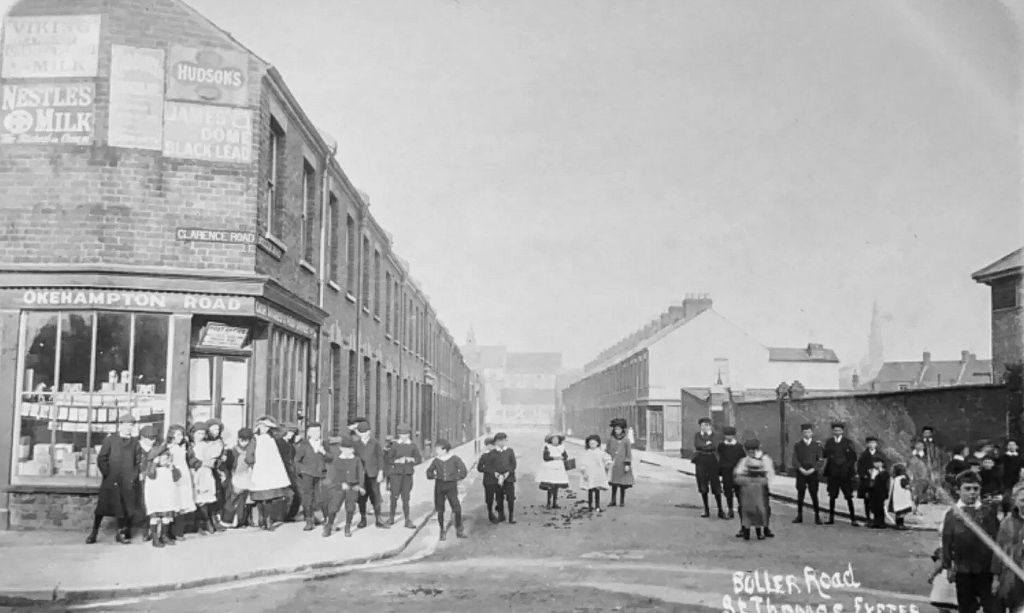
My Father lived within such a horizon. His life, shaped by war, displacement, and the arbitrary violence of competing powers, did not proceed in the orderly sequence that official histories so often suggest. Instead, it was marked by ruptures that did not remain in the past, but persisted—reappearing in memory, in silence, in the quiet, unspoken knowledge of what had been endured. The categories imposed upon him—enemy, ally, labourer, refugee—shifted with bewildering speed, each carrying consequences that could neither be anticipated nor contained. What appeared, from above, as decisions or settlements belonged to one kind of time; what was lived below unfolded in another altogether, where nothing was ever fully concluded, and where the past remained an active presence within the present.
And yet, it is precisely this deeper continuity—this persistence of lived time—that seems increasingly absent from the language through which the present seeks to understand itself. In its place, another register asserts itself: one that speaks not of endurance, but of resolution; not of memory, but of outcome. It is a language in which complexity is recast as negotiation, and negotiation as something that can be brought, decisively and finally, to a close.
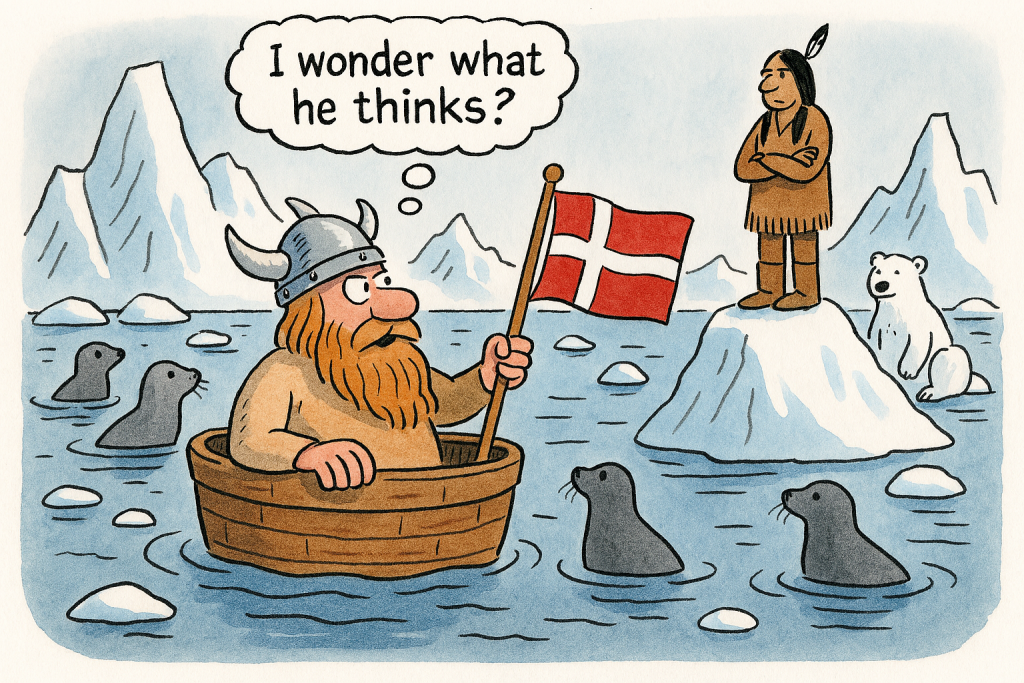
It is here that the word “deal” enters with such force. So often invoked by figures such as Donald Trump, it carries with it the assumptions of a particular kind of reasoning: that actors are defined by interests, that interactions are transactional, and that resolution lies in the successful alignment of terms. Within its own domain, this reasoning possesses a certain clarity, even an appeal. But when extended into the realm of history, identity, and long-standing conflict, it begins to displace more than it reveals.
Consider, for example, the relationship between the United States and Iran. It is not a discrete problem awaiting closure, but a layered accumulation of events, stretching back through the Iranian Revolution and into more recent episodes such as the Joint Comprehensive Plan of Action. Each moment leaves its trace. Each action is remembered, reframed, and folded into a narrative that cannot simply be set aside. A deal presumes closure. History does not permit it.
What is revealed here is not merely a mismatch of language, but a divergence in how reality itself is apprehended. On one side, a world of discrete actors and negotiable outcomes; on the other, a world of interconnections, in which actions reverberate across time and cannot be isolated from their consequences. Increasingly, it is the latter vision that seems closer to the truth.
Reality does not present itself as a collection of separate things, but as a web of relations. What appears isolated at one level reveals itself, at another, as deeply entangled. The idea that one can act upon the world, extract an advantage, and step away untouched becomes difficult to sustain. There is no outside position from which the consequences of action can be escaped. Even withdrawal is a form of engagement.
This has profound implications for how we think about power. If the world is relational, then the exercise of power is never purely external. To dominate, to coerce, to treat others as disposable is not simply to alter their condition—it is to reshape the network of relations in which one is oneself embedded. The effects return, often in unexpected and magnified forms.
The reduction of politics to transaction, then, is not merely inadequate—it is dangerous. It encourages a form of reasoning highly effective in identifying means, but largely indifferent to ends. It asks what can be done, but not what ought to be done, or what kind of world such actions bring into being. At its limit, it risks collapsing into the pursuit of power for its own sake—not as a means, but as the only end it can recognise.
And yet, there remain dimensions of human life that resist such reduction. Call them moral, historical, even spiritual. They are the dimensions in which meaning is formed, memory preserved, and the past continues to shape the present in ways that cannot be negotiated away.
The tragedy of our moment may lie here: not merely in misjudged policies, but in the collision of temporal frameworks that cannot be reconciled. A language of immediacy and closure encounters a world structured by duration and return. A logic of transaction meets a reality that cannot be transacted without remainder.
Decisions may be made with confidence in one register, while their consequences unfold in another.
My Father’s life, in its quiet and unassuming way, stands as a counterpoint: a reminder that history is not an abstraction, nor a problem to be solved, but a lived reality that resists simplification and demands attention.
The mismatch of time is not an abstract problem; it is alive in the decisions that shape our world today. When leaders perceive the world as a series of transactions, as problems with endpoints to be closed, they may act with certainty—but not with understanding. History, memory, and the web of human relations do not submit to schedules or leverage. They respond, inevitably, to what has been done, and their consequences unfold in ways that cannot be fully controlled.
To treat crises as if they were deals is to act upon a world one has already misunderstood. And a misunderstood world does not remain static; it returns, often amplified, often in forms that no negotiation can fully contain. The danger is not speculative—it is visible in the fractures, the escalations, the unseen reverberations of past action.
If we cannot perceive the depth and persistence of time, if we cannot reckon with the forces of memory and relational consequence, then even our best intentions may produce the worst outcomes. This is not a matter of ideology or policy preference. It is a law of consequences: when one framework of time meets another, unaligned, the results are unavoidable, and they are often tragic.
To recognize this is not to despair—it is to awaken. The task is not simply to act, but to act within a reality that endures beyond our immediate reach; to reckon with what cannot be closed, and to move with attention, restraint, and humility. Ignoring this is not a mistake—it is a danger whose costs we may only glimpse when it is too late.
Perhaps, then, the deeper task is not merely to act wisely, but to think and write differently about time and history altogether. There can never be a single narrative; there can only be layers—intersecting, overlapping, sometimes contradictory, yet always alive.
It is precisely because we attend only to the surface that history continually surprises us. Beneath the visible events lie currents, resonances, and consequences that remain unseen until they re-emerge, demanding recognition. Only now, in the confrontation with these layers, do we begin to catch up with history—or perhaps it is history itself that has finally caught up with us.
Чьё время? Чей мир?
О несоответствии времён и фатальных последствиях, когда историю воспринимают как сделку
Во все времена существует соблазн думать, что реальность, наконец, стала читаемой — что мир во всей своей сложности можно охватить, управлять им и, в конечном счёте, разрешить. В наши дни этот соблазн часто принимает особую форму: убеждённость, что события разворачиваются в рамках единого, общего горизонта, доступного расчёту и решению, и что то, что сегодня сопротивляется урегулированию, завтра может быть завершено при достаточной ясности и решимости.
И всё же под этой уверенностью скрыты признаки того, что мы не существуем в рамках одного согласованного времени, а в нескольких — движущихся рядом, иногда пересекающихся, но никогда полностью не совпадающих. То, что в одном регистре представляется проблемой, ожидающей разрешения, в другом проявляется как нечто гораздо более сложное: непрерывность без явного начала или конца, формируемая не только решениями, но и памятью, наследием и возвращением.
Именно в этом глубоком, долговечном ощущении времени разворачивается большая часть человеческой истории — редко объявляемая, редко разрешаемая, но всегда присутствующая под поверхностью событий.
Мой отец жил в таком горизонте. Его жизнь, сформированная войной, изгнанием и произвольным насилием конкурирующих сил, не развивалась в том упорядоченном порядке, который так часто изображают официальные истории. Она была отмечена разрывами, которые не оставались в прошлом, а сохранялись — проявлялись снова в памяти, в тишине, в тихом, невысказанном знании того, что было пережито. Категории, навязанные ему — враг, союзник, рабочий, беженец — менялись с поразительной скоростью, каждая неся последствия, которые невозможно было предвидеть или ограничить. То, что сверху выглядело как решения или соглашения, принадлежало одному времени; то, что переживалось снизу, разворачивалось в совершенно другом, где ничего никогда не завершалось полностью, и где прошлое оставалось живым в настоящем.
И всё же именно эта глубинная непрерывность — постоянство переживаемого времени — всё больше отсутствует в языке, через который настоящее пытается себя понять. На её месте звучит другой регистр: говорящий не о выносливости, а о завершении; не о памяти, а о результате. Это язык, в котором сложность превращается в переговоры, а переговоры — в то, что можно решительно и окончательно закрыть.
Именно здесь с силой появляется слово «сделка». Часто используемое такими фигурами, как Дональд Трамп, оно несёт с собой предположения определённого типа мышления: что действующие лица определяются интересами, что взаимодействия носят транзакционный характер, и что разрешение заключается в успешном согласовании условий. В своей области такое мышление обладает ясностью, даже привлекательностью. Но когда оно переносится в сферу истории, идентичности и долгосрочных конфликтов, оно скрывает больше, чем раскрывает.
Возьмём, например, отношения между Соединёнными Штатами и Ираном. Это не отдельная проблема, ожидающая закрытия, а многослойное накопление событий, уходящее корнями в Иранскую революцию и более недавние эпизоды, такие как Совместный комплексный план действий. Каждый момент оставляет свой след. Каждое действие запоминается, переосмысливается и вплетается в повествование, которое нельзя просто отложить. Сделка предполагает завершение. История этого не позволяет.
Здесь проявляется не просто несоответствие языка, но и расхождение в том, как реальность воспринимается. С одной стороны — мир отдельных акторов и согласованных результатов; с другой — мир взаимосвязей, где действия резонируют во времени и не могут быть изолированы от своих последствий. Всё чаще именно вторая картина оказывается ближе к истине.
Реальность не представляет собой набор отдельных вещей, а скорее сеть отношений. То, что на одном уровне выглядит изолированным, на другом раскрывается как глубоко переплетённое. Идея о том, что можно действовать в мире, извлекать преимущество и остаться неповреждённым, становится трудноосуществимой. Нет внешней позиции, с которой последствия действий можно было бы избежать. Даже уход в сторону — это форма участия.
Это имеет глубокие последствия для понимания власти. Если мир реляционен, то осуществление власти никогда не является полностью внешним. Доминировать, принуждать, обращаться с другими как с расходным материалом — значит не просто менять их положение; это значит перестраивать сеть отношений, в которой сам человек встроен. Эффекты возвращаются, часто неожиданно и в усиленной форме.
Сведение политики к транзакциям не просто недостаточно — оно опасно. Оно поощряет мышление, эффективное в выявлении средств, но равнодушное к целям. Оно спрашивает, что можно сделать, но не что следует сделать и какой мир создают эти действия. В пределе оно рискует превратиться в стремление к власти ради самой власти — не как средство, а как единственную цель.
И всё же остаются измерения человеческой жизни, которые противостоят такому упрощению. Моральные, исторические, духовные — именно в них формируется смысл, сохраняется память, и прошлое продолжает влиять на настоящее таким образом, который невозможно согласовать.
Трагедия нашего времени может заключаться именно здесь: не только в ошибках политики, но и в столкновении временных рамок, которые невозможно примирить. Язык немедленного завершения сталкивается с миром, структурированным длительностью и возвратом. Логика транзакции встречает реальность, которую нельзя обработать без остатка.
Решения могут приниматься с уверенностью в одном регистре, а их последствия разворачиваться в другом.
Жизнь моего отца, в своей тихой и скромной манере, служит контрапунктом: напоминанием о том, что история не абстрактна и не является проблемой, которую нужно решить, а переживаемая реальность, сопротивляющаяся упрощению и требующая внимания.
Несоответствие времён — это не абстрактная проблема; оно живо в решениях, формирующих наш мир сегодня. Когда лидеры воспринимают мир как серию транзакций, как проблемы с конечной точкой закрытия, они могут действовать с уверенностью — но не с пониманием. История, память и сеть человеческих отношений не подчиняются расписаниям или рычагам давления. Они реагируют неизбежно на то, что было сделано, и последствия разворачиваются таким образом, который невозможно полностью контролировать.
Обращаться с кризисами, как с обычными сделками, значит действовать в мире, который уже был неправильно понят. А непонятый мир не остаётся статичным; он возвращается, часто усиленно, часто в формах, которые никакие переговоры не могут полностью охватить. Опасность не спекулятивна — она видна в трещинах, эскалациях и невидимых отголосках прошлых действий.
Если мы не способны воспринять глубину и стойкость времени, если мы не можем учитывать силы памяти и последствия взаимосвязей, то даже лучшие намерения могут породить наихудшие результаты. Это не вопрос идеологии или политических предпочтений. Это закон последствий: когда одна временная рамка сталкивается с другой, несогласованной, результаты неизбежны, и они часто трагичны.
Признать это — не значит впасть в отчаяние; это значит пробудиться. Задача не просто действовать, а действовать в реальности, которая существует за пределами нашей непосредственной досягаемости; учитывать то, что невозможно закрыть, и двигаться с вниманием, сдержанностью и смирением. Игнорирование этого — не ошибка, а опасность, цену которой мы можем ощутить лишь тогда, когда будет уже слишком поздно.
Возможно, более глубокая задача — не только действовать мудро, но и думать и писать о времени и истории иначе. Не может существовать единого нарратива; могут быть только слои — пересекающиеся, накладывающиеся, иногда противоречивые, но всегда живые.
Именно потому, что мы видим только поверхность, история продолжает нас удивлять. Под видимыми событиями скрываются течения, резонансы и последствия, которые остаются незамеченными, пока вновь не проявляются, требуя признания. И только когда мы сталкиваемся с этими слоями, мы начинаем догонять историю — или, возможно, сама история наконец догнала нас.
Она возвращается не как память, не как урок и не как фигура речи, а как живой, неотвратимый мир, который требует внимания, уважения и мудрости. Игнорировать его — значит ставить на карту всё, что мы считаем стабильным. Время не прощает, и реальность не ждёт, пока мы её поймём.